
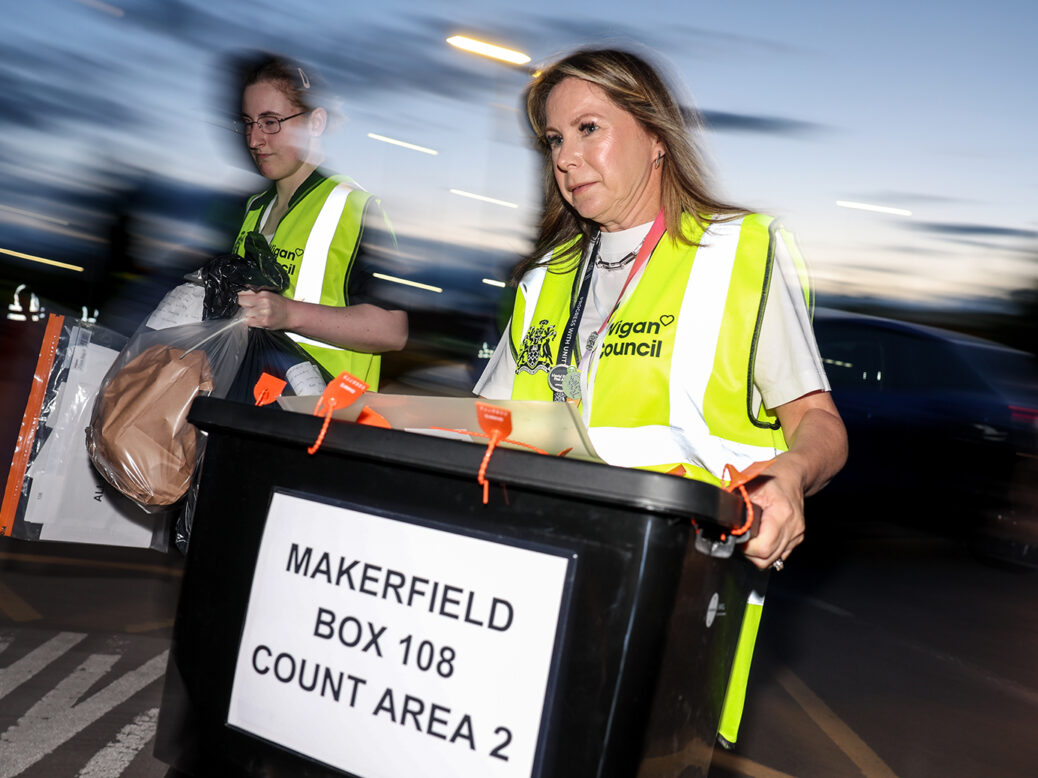
Makerfield could have ended Labour. Instead, its residents handed the party one last chance, and Andy Burnham and his team earned every vote of it. Their campaign was a masterclass in captured hearts and captured vibes. A reminder that hope, marshalled well, is still a force in politics, galvanising activists and voters alike. In Stubshaw Cross Community Club, that hope was palpable.
But it will be dead on arrival in Westminster without a plan to turn it into results. The temptation now will be to mistake a change of mood for a change of course. Whatever happens next in this new chapter of Labour politics, the sense of decline draped across this country has not lifted. It is more than a feeling. Every indicator on the economic dashboard – in Wigan as in Westminster – is flashing red. Debt too high. Growth too low. Living standards stagnant. Two decades of incrementalism have layered our economy and public services so thickly they can seem beyond repair.
All this is set against a constant mood music of despair, served up by feeds that amplify the dire as though it were happening everywhere: riots, violent crime, and failed integration. The soundtrack of modern Britain.
None of this is to pour cold water on the white heat of the Makerfield moment. It is to insist we make it more than a moment – that we turn the place where hope arrived into the place where decline was finally confronted. The blanket of pessimism is not immovable, but lifting it will take political leadership of the highest order: leadership that treats it as its job to force Labour to face resolutely outward.

That involves more than charisma or better communications, though both matter. It is leadership that understands its role as national teacher and principal storyteller and, in the end, decision-maker-in-chief.
In decades to come, we’ll look back at this period as we may now look back on the dawn of the Industrial Revolution. When a handful of Liverpool merchants bankrolled George Stephenson’s improbable carriage on iron rails to Manchester, the intercity railway was born. When Manchester workers campaigned for a free Saturday afternoon, the weekend was born. When Keir Hardie set out to get the newly minted working class into parliament, the Labour Party was born.
The last great industrial revolution remade Britain socially, economically, and politically. This one will too. We cannot simply let it happen to us, siting back and letting an uncontrolled explosion go off. It is reckless, and politically, Nigel Farage has already claimed that territory. But neither can we cling to a status quo that is no longer delivering.
Makerfield must light the blue touchpaper for a controlled explosion: shaping change rather than resisting it, channelling disruption towards national renewal. Central to that is a story about Britain’s power: not having it, needing it, building it.
It should begin with power in its most literal sense. Recasting the government’s Clean Power 2030 mission as Cheaper Power 2030 would do more than change a slogan. It would force every energy decision through one test: does it cut costs for families and British industry?
It runs through an approach to AI sovereignty realistic about what Britain can and cannot build alone – and committed to building on our strengths. We hold best-in-class data – the NHS chief among it – and we should trade access to it for access to the frontier models leading this revolution. A hard argument, but a necessary one: otherwise we risk turning up empty-handed, using technology invented and powered elsewhere, then acting surprised when it is taken away.
It means reforming a welfare system that has become a safety net slung so low that those who fall in cannot get out. The scourge of nearly a million Neets is the central story, but we shouldn’t ignore the rise in mental-health diagnoses and the benefit trap that follows. Tackling it now would show investors that Britain is serious about balancing its books and show people with mental-health conditions that we are serious about supporting them into purposeful, working lives.
It will spread opportunity to every corner of the country through an industrial strategy that builds the conditions for opportunity rather than gambling on picking winners, powered by a defence investment plan built to fight the threats of tomorrow. Picture the dual-use skills: young people trained as AI engineers, transforming businesses on every high street and, if it came to it, hardening our cyber defences; drone pilots who lead the logistics industry in peacetime and could hold the skies in conflict.
It will unlock the private sector – the principal engine of innovation – and be unashamed to call that the progressive choice, tackling the marginal tax rates made perverse by badly designed student loans and childcare costs, which leave tens of thousands of the workers who should be our most productive (and core Labour voters) feeling punished for getting on.
It means going faster on planning and driving reform through every public service. Data-driven, personalised, preventative should be the norm so that in health and education we stop counting waiting lists and literacy rates and start making adults healthier and children smarter. Above all, it means putting growth first, because prosperity is how lives are made healthier and happier, wherever they are lived.
And all of it should be held together by a stronger centre of government: a new Prime Minister’s Strategy Unit whose very existence signals that decisions for tomorrow are being taken today.
These are choices that would make a leader in search of comfort with their own party squirm. They are also the choices that make a leader. Confront the trade-offs honestly, bind them into a story about Britain’s future, and you trade a spell of unpopularity for something far more valuable: the public’s trust.
Do that, and the hope that filled a community club in Makerfield need not become the memory of one good night. It can be the start of the only thing that ever truly changes a country: a plan and the political leadership to see it through.
[Further reading: Andy Burnham wins big in Makerfield]
Content from our partners


Related

Join the debate
Subscribe here to comment